Resfoody
Problem, solution, stack, timeline, and outcomes — from a real product in our portfolio.
The problem
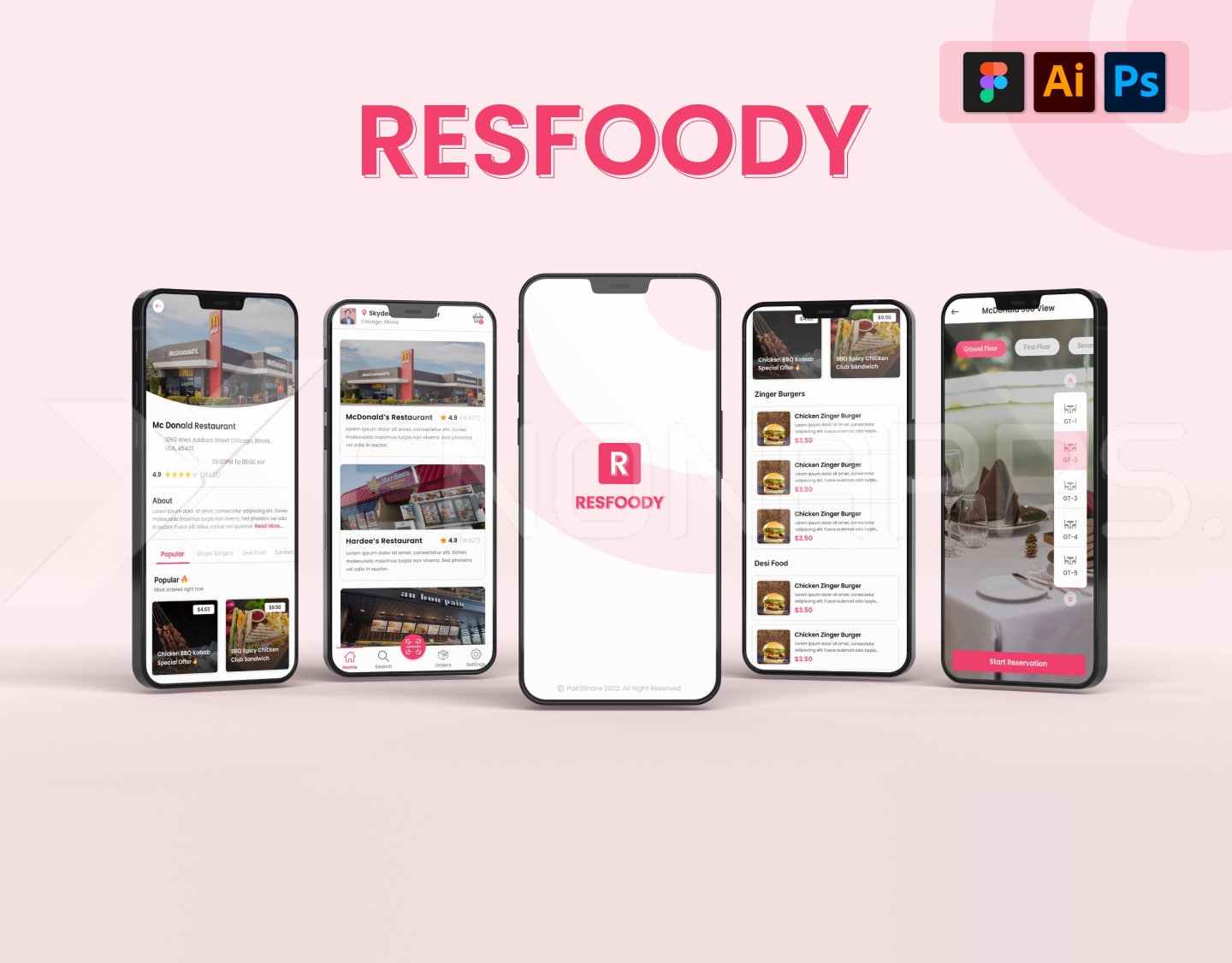
Food and beverage venues juggle reservations, menus, and orders across tools that rarely stay in sync. Guests expect a smooth reservation path; operators need the same data on mobile and back-office — not a one-restaurant point solution that breaks when a second venue opens. Guest booking paths and kitchen reality diverge quickly when menus and reservations live in disconnected tools. Multi-venue operators need isolation without forking a codebase per location. When guest channels and kitchen tools disagree on availability, venues bleed goodwill faster than engineering can ship another theme tweak.
The solution
We built Resfoody as a cloud platform for the food and beverage sector with a mobile-first experience: reservation and ordering flows, menu and catalog management, and operational views that stay in sync across devices. Shared infrastructure keeps venues isolated while the product stays ready to onboard the next location. Unified guest booking with ops-facing order and menu sync, plus per-venue isolation on shared infrastructure. Miami hospitality peaks and bilingual guest paths informed QA priorities. We unified guest booking with ops menu truth and designed multi-venue isolation so openings reuse configuration. Peak and bilingual QA scenarios were first-class.
Snapshot
| Domain | Food & beverage SaaS |
|---|---|
| Surfaces | Mobile + ops sync |
| Focus | Reservations, menus, orders |
| Soft band | $30K–$80K+; multi-venue pushes higher |
Key flows
Guest reservation path
Guests get a clearer booking path on mobile instead of juggling calls and inconsistent tools.
Menu & order ops
Operators manage catalogs and day-to-day orders in one surface with sync to back-office views.
Multi-venue readiness
Shared infrastructure with per-venue isolation so the next location is not a ground-up rebuild.
Milestones
- Sector discovery for F&B reservation/ops
- Booking and menu/order milestone delivery
- Sync demos operators could exercise
- Handover for venue onboarding
Soft price context
Single-venue F&B apps often fit $30K–$80K; multi-venue SaaS with richer roles trends toward $80K–$200K+. Miami hospitality operators: talk to us about US-hours kickoffs on Zoom or Calendly. Loyalty and marketplace add-ons should re-band rather than hide inside a single-venue SOW.
F&B venues juggle guest expectations and kitchen reality—reservation and order sync cannot diverge without angry floor staff.
Multi-venue readiness meant per-venue isolation on shared infrastructure instead of forking a codebase per location.
Soft band: single-venue often mid-band; multi-venue SaaS with richer roles trends toward $80K–$200K+.
Miami hospitality operators often care about weekend peaks and bilingual guest paths—call those out in discovery.
Qualitative outcomes: clearer guest booking path, unified menu/order ops, onboarding without full rebuilds.
No invented cover counts or GMV in this study—ask for a scoped proposal for your venues.
Menu sync conflicts are product bugs, not training issues—ops needs a single source for what guests can order.
Reservation no-show handling and kitchen capacity cues deserve explicit v1 decisions.
Multi-venue onboarding should clone configuration, not clone repositories.
Buyer tip: list venues, roles, and peak hours before asking for a number.
Bilingual guest paths common in South Florida informed content QA priorities qualitatively.
Qualitative success: coherent guest booking plus ops surfaces without inventing cover-count KPIs.
Related: Miami location pages and hospitality-aware cost conversations in the ultimate pricing guide.
Guest path: booking and ordering must reflect the same menu truth kitchen staff see—or floor chaos follows.
Ops path: station-friendly statuses beat consumer chrome when tickets are flying.
Multi-venue: configuration isolation on shared infrastructure; no repo fork per location.
Peak readiness: weekend hospitality load informed QA scenarios qualitatively—no invented cover counts.
Bilingual: guest-facing copy reviewed for EN/ES where relevant instead of last-day machine translate.
Soft band: single-venue often mid-band ($30K–$80K); multi-venue SaaS with richer roles trends $80K–$200K+.
Non-claims: no GMV, cover, or ranking metrics fabricated for this page.
Buyer prep: list venues, roles, peak hours, and POS/CRM systems before asking for a number.
Conflict handling: menu sync conflicts surfaced as product bugs with owners—not training lectures alone.
Reservations: no-show and capacity rules need explicit v1 decisions or support becomes the product.
Onboarding: clone venue config rather than re-implementing features per site.
Design: empty states for closed kitchens and sold-out items prevent ghost orders.
Integrations: payment and channel partners estimated as milestones with sandbox proof.
Miami note: storm-week and event calendars can shift freeze dates—say them aloud in discovery.
Handover: venue admin docs and escalation contacts included so openings are not tribal knowledge.
Phase honesty: loyalty and marketplace expansions stay out of v1 unless band and SOW say otherwise.
Related: Miami cost post for local delivery context; Flutter pages if dual-store UI is the differentiator.
Stakeholder tip: seat ops and guest-experience owners in the same demo to kill contradictory requirements early.
Field note: 86ing an item mid-service had to propagate before guests could order ghosts.
Field note: venue managers needed read-only versus edit roles from day one.
Field note: printer and ticket routing integrations were estimated separately when present.
Field note: guest SMS/WhatsApp confirmations were optional phase-two to protect mid-band v1.
Field note: closing early on storm days required an obvious closed state in guest UI.
Venue staff needed bulk menu edits without breaking guest cache mid-lunch.
Read receipts for ticket acknowledgment reduced duplicate fires at the pass.
Guest cancellation windows were made configurable per venue policy.
We avoided dark patterns that rebooked guests without clear consent.
Analytics focused on funnel drop between browse and book—no vanity rank charts.
Tablet layouts for host stands were scoped as an optional milestone.
Photo menu assets had size budgets for flaky venue Wi-Fi.
Role-based audit of who changed prices reduced finger-pointing after service.
Integrations sandbox checklist blocked production keys in demo builds.
Launch runbook included who can mark a venue closed during storms.
Stack
- Cloud-hosted multi-venue SaaS architecture
- Mobile-first reservation, menu, and order flows
- Real-time sync between mobile and back-office views
- Shared infrastructure with per-venue isolation
Timeline
Sector discovery and reservation/ops scoping, then milestone delivery for booking, menu/order flows, and sync — with demos operators could exercise before handover.
Outcomes
- Guests and staff get a clearer reservation and order path on mobile.
- Operators manage menus, catalogs, and day-to-day ops in one surface.
- New venues can onboard without a custom rebuild for each location.
- Guest booking and ops surfaces share a coherent menu story.
- Per-venue isolation avoids forking a codebase per location.
- Hospitality peak and bilingual paths informed QA priorities qualitatively.
- Guest and ops share a coherent menu truth.
- Venues onboard via configuration rather than codebase forks.
- Peak and bilingual scenarios informed QA qualitatively.
- Menu sync conflicts have clear product ownership.
- Capacity and no-show rules were decided explicitly for v1.
Capabilities
- Reservation and booking flows for food & beverage venues
- Menu, catalog, and order management
- Real-time sync between mobile and back office
- Multi-venue architecture ready to onboard new locations
Building something similar?
Free scoping call with our team — book Calendly, call, email, or send a short brief.