Pharmassist Rider
How we built Pharmassist Rider: the problem, the solution, the stack and the result. See more in our portfolio.
The problem
Medicine delivery is logistics with higher stakes: orders must reach the right person, on time, with a clear record of every handoff. Pharmacies needed a dependable rider-side platform for doorstep delivery of online medicine orders. Riders cannot navigate deep menus in traffic, and status language that mismatches pharmacy ops creates support chaos. Confirmation evidence must be practical without overclaiming compliance certifications. Peak delivery windows compress patience for UI mistakes, and mismatched status words between pharmacy staff and riders create duplicate support threads.
The solution
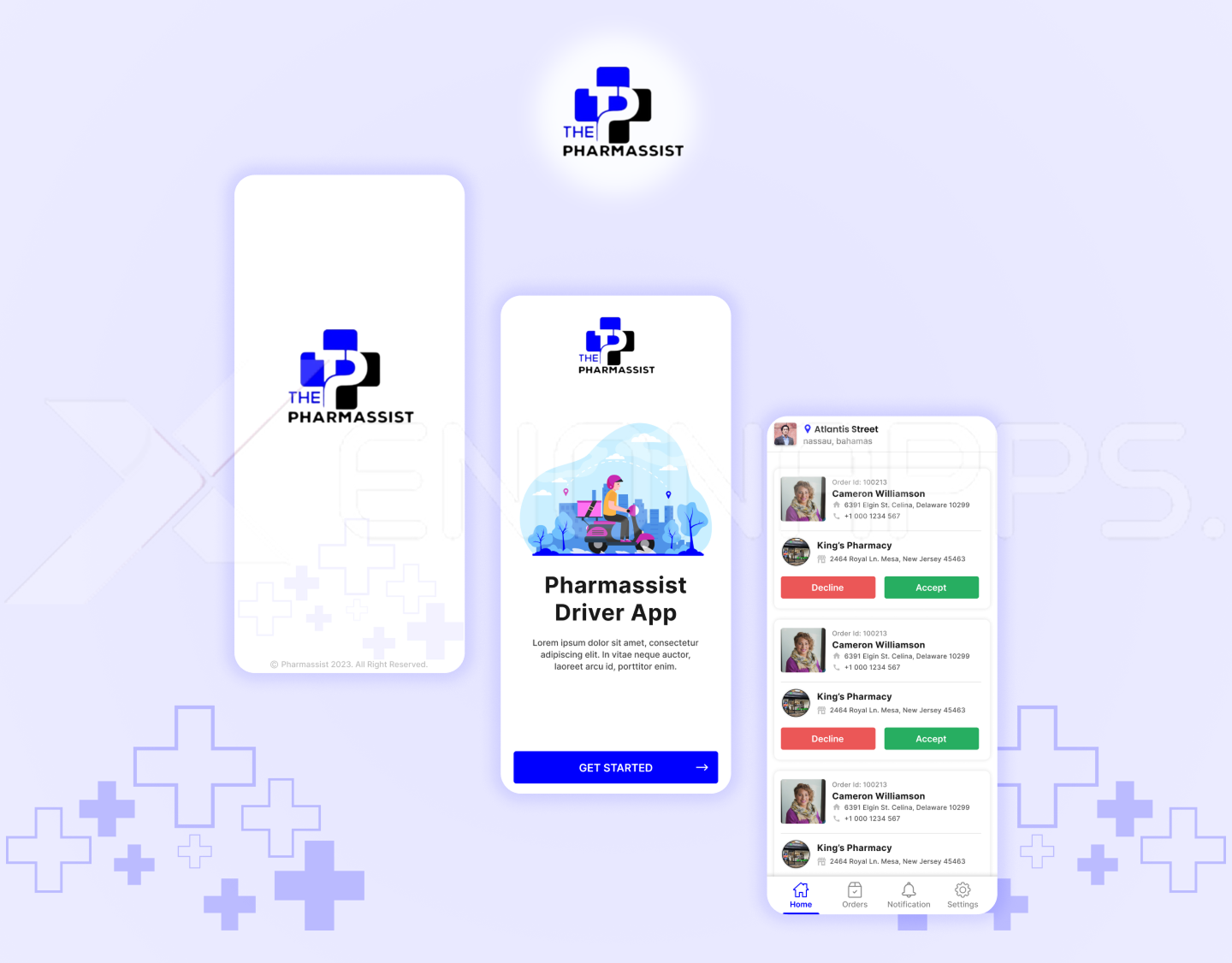
We built the rider app powering the delivery leg: incoming order queues, pickup and drop-off details, live status updates through each stage of the run, and delivery confirmation at the door. The interface is deliberately simple: riders use it on the move, one-handed, often in traffic. Glanceable queues, ops-aligned status vocabulary, and doorstep confirmation history shaped the build. HIPAA-aware topics (logging, media storage, access) were discussion starters in discovery. We optimized for glanceable queues, shared lexicon, and practical confirmation history, with HIPAA-aware discovery questions documented as open risks, not marketing seals.
Snapshot
| Domain | Healthcare logistics |
|---|---|
| Built with | Flutter, one codebase for iOS and Android |
| Role | Rider / delivery client |
| Focus | Queue → pickup → doorstep confirmation |
Key flows
Order queue
Riders see the next pickup without digging through clutter, designed for one-handed use in traffic.
Stage tracking
Each delivery stage is visible so pharmacies and riders share the same status language.
Doorstep confirmation
Confirmation and history close the loop for medicine handoffs without overclaiming clinical outcomes.
Milestones
- Logistics workflow mapping with pharmacy stakeholders
- Field UI for glanceable queues
- Status model and confirmation flows
- Handover for continued ops iteration
Hardest problem: the status and confirmation flow. Status words had to match pharmacy operations vocabulary, and doorstep confirmation had to be practical to capture on the road and reviewable afterwards without overclaiming compliance.
Medicine delivery UX fails when riders need two hands or deep navigation trees in traffic, so glanceable queues were non-negotiable. The next stop and status dominate the first screen, and decorative maps never block the primary action.
Status language had to match pharmacy ops vocabulary so support calls did not become translation exercises. Stage names were frozen before launch week so training docs did not drift.
HIPAA-aware discovery questions: what is logged, where media lives, who can access history. We discuss them without overclaiming certifications.
Queue logic favours the next actionable stop over sort options riders ignore in traffic. Critical actions stay reachable one-handed, and deep trees were cut from rider v1.
Confirmation evidence: doorstep proof is practical and reviewable. Photo compression balances evidence quality against flaky uploads, and failed confirmations give riders a clear retry or report path.
Privacy: sensitive detail is minimized in push notifications on lock screens, and rider accounts cannot reach admin reporting surfaces.
Field QA: test on the road with real glare and gloves, because lab-only demos mislead. Tap-target needs changed for rain and glove use on the Android devices riders actually carry.
Device matrix included older phones common in contractor fleets, and night-mode contrast mattered more than brand accents on evening routes.
Always-on location was discussed as a battery tradeoff and not enabled silently. Geofence experiments stayed experimental until false positives were acceptable to ops.
Offline draft confirmations sync when signal returns, with conflict notes.
Pharmacies disagreed on cancellation reasons, so reasons are configurable data.
Handover: runbooks for queue exceptions, media retention and failed uploads accompany the build. Customer-facing tracking portals are a different product surface and stay out of rider v1.
Buyer tip: bring the current paper or WhatsApp workflow to the scoping call. Screenshots of the old process beat abstract journey decks. No delivery-time KPIs or volume ranks are published here.
Stack
- Flutter (Dart): one codebase for iOS and Android
- Order queue with pickup and drop-off details
- Stage-based delivery status tracking
- Confirmation and delivery history
Timeline
Logistics workflow mapping with pharmacy stakeholders, then sprint delivery focused on queue clarity and one-handed field UI before handover.
Outcomes
- Riders see the next pickup and drop-off without digging through cluttered screens, and the UI stays glanceable for one-handed use in traffic.
- Each delivery stage is trackable from queue to doorstep confirmation.
- Status vocabulary matches pharmacy ops language, so support macros and training material use the same words.
- Stage names stayed stable through launch training.
- Doorstep confirmation history is available for qualitative audit conversations.
- Push copy avoids sensitive detail on lock screens.
Capabilities
- Order queue with pickup and delivery details
- Stage-by-stage status tracking per delivery
- Delivery confirmation and history
- Simple, glanceable UI designed for use on the road
Building something similar?
Free scoping call with our team. Book Calendly, call, email, or send a short brief.