Bodynetic
Problem, solution, stack, timeline, and outcomes — from a real product in our portfolio.
The problem
Poor posture is one of those problems everyone has and no one tracks — and correcting it normally requires a trainer or physiotherapist watching you. The goal: put that supervision in the phone. Gym environments add glare, occlusion, and interrupted attention—so the product had to fail gracefully when the model was unsure instead of inventing false confidence. Athletes abandon coaching apps that feel like paperwork before a set, and they distrust cues that sound confident when the camera view is partial. Gym lighting, mirrors, and crowded floors make computer-vision demos from clean studios misleading. The product also had to respect privacy instincts—many users will not accept shipping every frame to a remote GPU without a clear reason. Beyond the camera loop, Bodynetic had to decide what not to ship: no trainer marketplace in v1, no calorie theater, and no silent cloud fallback that surprised privacy-sensitive athletes. The hard product problem was translating pose estimates into coaching language people trust under fatigue—short cues, honest uncertainty, and a session rhythm that matches how sets actually happen on a gym floor.
The solution
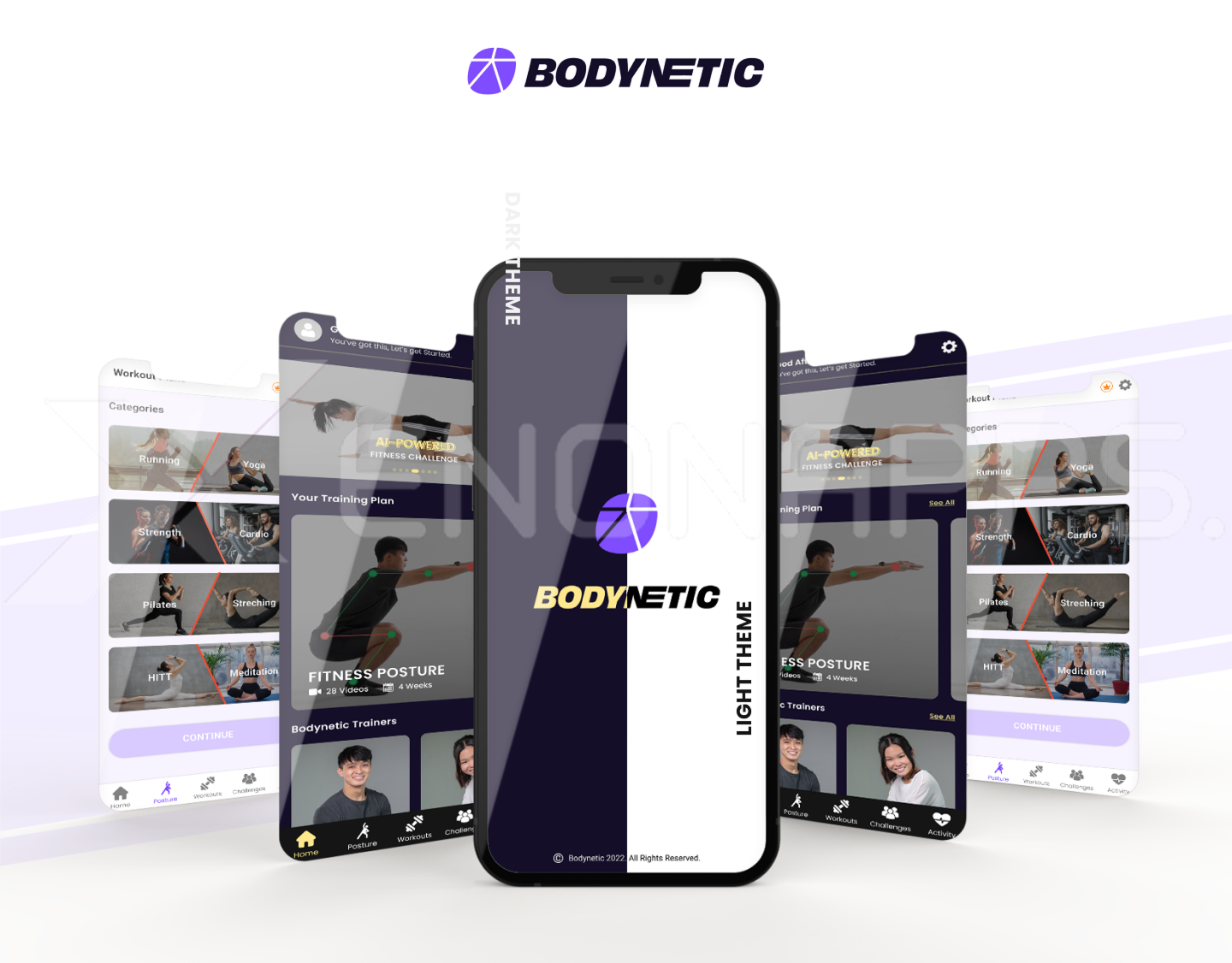
Bodynetic uses AI-powered pose detection through the phone camera to spot bad posture and guide the user toward correcting it. The app analyzes body position in real time, flags misalignment, and walks users through corrective feedback — an expert eye, available anywhere. We designed explicit fallback copy and coaching cues for low-confidence moments, and kept model updates as a deliberate release path rather than a silent surprise. We prioritized a short session setup, high-contrast glanceable cues, and explicit low-confidence fallbacks. On-device inference was treated as a product requirement where feasible, with a deliberate model-update channel instead of silent swaps. Progress history emphasized honest practice logs rather than vanity streaks. Trainer-marketplace ideas stayed out of v1 to protect mid-band delivery. Delivery emphasized a prototype-first path: validate pose detection on real gym footage early, time session setup with athletes, then harden lighting and occlusion cases before store packaging. Architecture notes and a model-update runbook were treated as handover artifacts so the coaching loop could be maintained without tribal knowledge. Qualitative success meant athletes finished setup without abandoning and understood cues without needing a trainer to interpret the screen.
Snapshot
| Domain | Fitness · on-device AI |
|---|---|
| Platforms | Mobile |
| Focus | On-device intelligence + coaching UX |
| Soft band | $30K–$80K+ typical mid-complexity |
Key flows
Session setup
Athlete opens a session and confirms the movement with minimal setup fields—secondary options stay collapsed until needed. Timing this path with real athletes exposed paperwork friction that wireframes hid.
Camera framing
Camera permission and framing cues appear before inference starts so users understand what good positioning looks like. Clear framing reduced false flags caused by cropped joints and mirror glare.
In-set coaching
During the set, glanceable coaching cues update without burying the athlete in charts. Low-confidence moments show honest fallback copy instead of fake certainty that would erode trust mid-workout.
After-set history
After the set, progress history emphasizes consistent practice over vanity streaks or invented calorie claims. The history surface is meant to encourage return sessions, not leaderboard theater.
Secondary share paths
Optional share or coach review paths stay secondary so the core loop remains workout-first. Expanding into trainer marketplaces was explicitly deferred to protect mid-band delivery.
Milestones
- Discovery: movement list, failure modes when the model is unsure, offline expectations, whether coaches are a second role in v1.
- Prototype: session setup timed with real athletes; cut fields that added friction without clarity.
- On-device path: latency and privacy treated as requirements; model update channel defined as a deliberate release.
- Hardening: gym lighting and occlusion tests, battery awareness, store questionnaire notes for health-adjacent categories.
- Handover: architecture notes, update runbook, and qualitative success criteria agreed without fabricated KPI theater.
- Release: dual-store packaging with health-adjacent questionnaire answers prepared alongside screenshots and privacy copy.
- Post-launch: model updates follow the written channel; rollback notes travel with each release so coaching behavior stays explainable.
Soft price context
Similar on-device fitness coaching products often land in the $30K–$80K growth band when v1 stays single-sided. Trainer marketplaces, wearables, class booking, or heavy cloud ML pipelines push toward $80K–$200K+. Your SOW decides after discovery—bands are orientation, not a pasted promise. Discovery still starts with movement lists, unsure-model behavior, offline needs, and whether coaches are a second role before any screen inventory. Camera ML spikes, bilingual coaching copy, and coach-role admin surfaces are common re-band triggers—name them early so the SOW does not pretend they are free.
Session setup had to stay short: athletes abandon flows that feel like paperwork before a workout. We cut fields aggressively and kept progressive disclosure for advanced options.
Feedback UX prioritized glanceability—large cues, minimal chrome—because users look at a phone between sets, often with wet hands and bright gym lighting.
Bodynetic refused dashboard vanity: no fabricated calorie burn or leaderboard theater in this write-up.
Process detail that mattered: we kept a written matrix of gym lighting and occlusion cases instead of trusting studio demos. Mirror reflections and partial views were first-class failure modes.
Stack reality: mobile clients plus on-device pose analysis plus a deliberate model-update path. Remote GPU inference stayed optional and explicit when product requirements demanded it.
UX writing was part of engineering: unsure-model states needed coach-like language, not spinner-only emptiness. Athletes should know when to adjust framing versus when to ignore a weak cue.
QA emphasis included thermal and battery behavior during longer sessions—camera pipelines that look fine for thirty seconds can degrade when sets stack back-to-back.
Buyer takeaway: if your fitness roadmap adds wearables, class booking, or nutrition logging, bring those as separate discovery tracks. Bodynetic's lesson is about coaching-loop integrity under messy gym conditions—not a template for every wellness app.
Problem detail: trainers and athletes disagree on what good form feedback looks like; we aligned on glanceable cues first and deferred advanced analytics charts.
Miami delivery note: US-hours demos and shared whiteboards on video helped align product and training stakeholders without inventing local KPIs.
Non-claims: this study does not publish accuracy percentages, download ranks, or revenue lifts. Ask for a scoped evaluation plan if metrics are required for purchase.
Adjacent reading: AI automation pages for ops around the product; Flutter and custom mobile pages for broader build options; cost guide for band theory.
Approach detail: session setup latency was budgeted separately from inference latency so onboarding friction did not masquerade as model slowness.
Outcome detail: demos worked without shipping every frame remotely, which simplified privacy conversations and flaky gym Wi-Fi scenarios.
Constraint detail: wet hands, glare, and occlusion were treated as normal; contrast and framing guidance shipped as product, not polish.
Process detail: weekly demos used messy real-world clips, which reordered the backlog twice when studio-only samples lied.
Accessibility note: large tap targets and high-contrast cues mattered for quick between-set interactions.
If wearables enter roadmap later, treat sensor fusion as a new discovery—do not assume the same band automatically.
Narrative: Bodynetic is a coaching feedback product first. Every backlog fight was resolved by asking whether athletes would see value between sets within seconds.
Narrative: Privacy and latency were co-equal constraints. Solving only one produces a demo that fails either trust or usability in real gyms.
Narrative: We kept charts out of the primary loop. Athletes asked for cues they could act on immediately; analysts can arrive in a later phase if demand appears.
Narrative: Soft band planning stayed mid-range because v1 refused marketplace expansion. That refusal was a product decision, not a sales limitation.
Stack
- iOS and Android mobile clients
- Camera-based pose detection
- On-device AI for posture analysis
- Real-time corrective feedback loops
- Framing and permission UX before inference
- Model update channel with rollback notes
- Low-confidence fallback coaching copy
Timeline
Pose-detection prototype validated early, then milestone builds for guidance UX and on-device analysis before store-ready packaging. Discovery locked movement scope and unsure-model behavior before UI polish. Hardening covered gym lighting, mirrors, occlusion, and battery awareness. Store questionnaires for health-adjacent categories were scheduled as milestones, not last-week surprises.
Outcomes
- Users get posture feedback without booking an in-person trainer session.
- Misalignment is flagged in real time through the phone camera.
- Analysis stays responsive and private by running on-device.
- Session setup time dropped in qualitative athlete tests after fields were cut aggressively.
- Low-confidence moments show honest fallback copy instead of invented certainty.
- Progress history emphasizes practice consistency without vanity calorie theater.
- On-device path reduced dependence on flaky gym Wi-Fi for the core coaching loop.
- Model updates follow a written release path with rollback notes.
- Stakeholders can demo the loop without claiming fabricated accuracy percentages.
- Framing guidance before inference reduced obvious false flags from cropped joints in qualitative gym tests.
- Health-adjacent store questionnaire prep happened as a milestone instead of a submission-week scramble.
- Handover included architecture notes and an update runbook so model changes stay deliberate and reversible.
Capabilities
- Camera-based pose detection and posture analysis
- Real-time misalignment flags with corrective guidance
- Progress-oriented, coach-style feedback loops
- On-device AI for responsive, private analysis
Building something similar?
Free scoping call with our team — book Calendly, call, email, or send a short brief.